Short answer
Day and night are two distinct gameplay loops. Human Coen relies on swordplay and carved-rune witchcraft; vampire Coen gains claws, feeding, Shadowstep, Clawride, and supernatural traversal. Changing time can spend part of the rescue budget, so the other form is a route choice—not a free cosmetic toggle.
Key facts
- Human by day, vampire by night
- Different abilities and traversal routes
- Runic scars used for human magic seal at night
- Vampire form uses blood and supernatural movement
- Quest approach, clues, and world activity can change by time of day
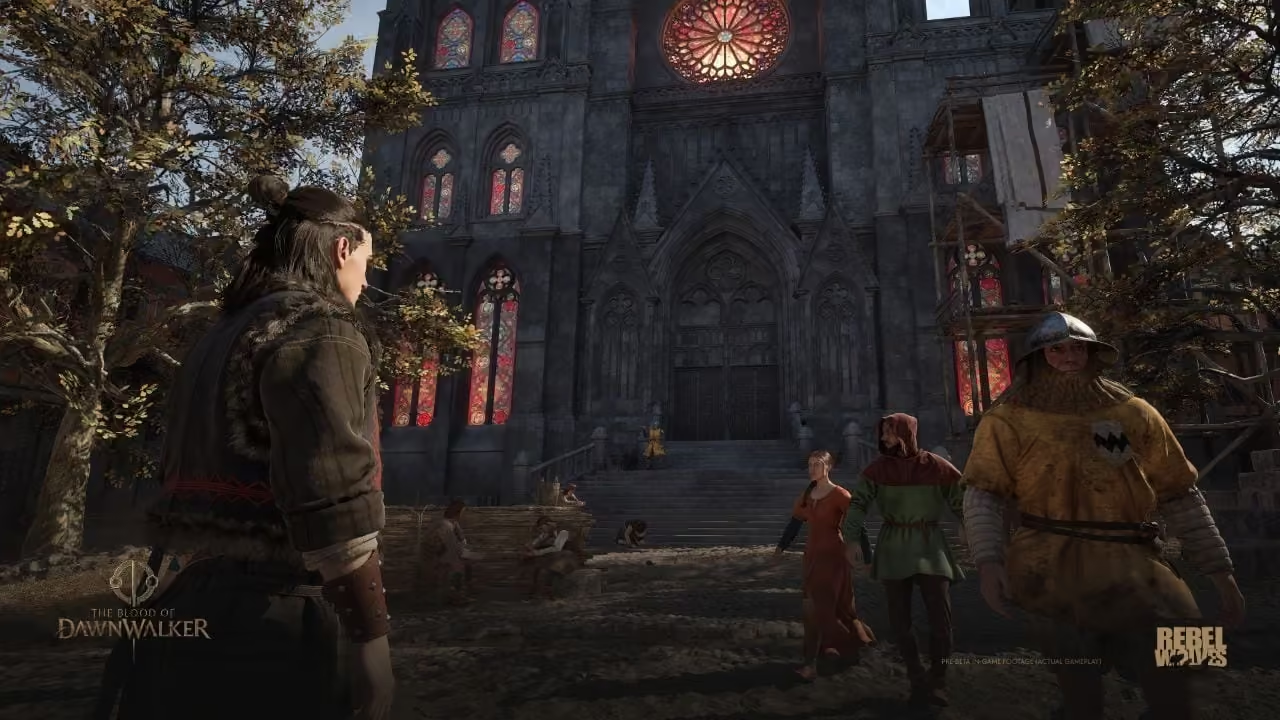
Day: sword control and witchcraft
During the day, Coen presents as human. Sword combat supports automatic omni-controls or directional attacks and blocks, while active abilities can spend charges built through successful combat actions.
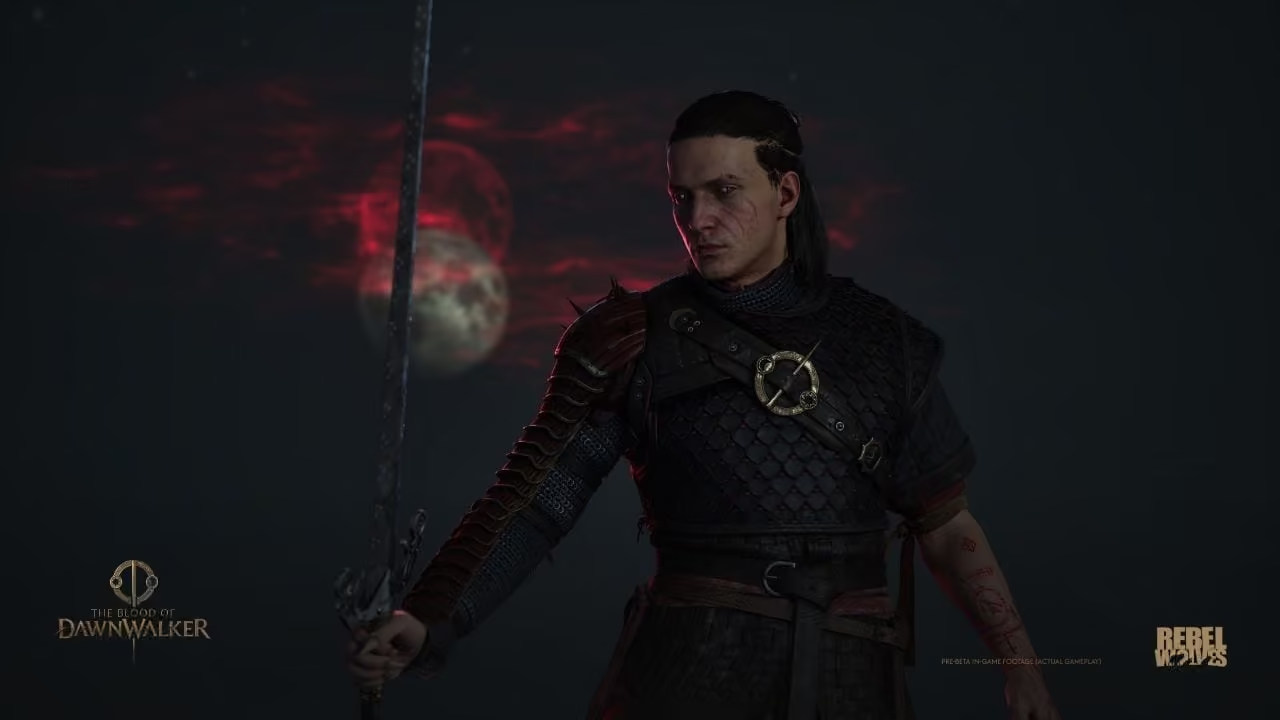
Human witchcraft uses runes carved into Coen's flesh as a gate for magic. Official material names effects such as Burning Blood, Feral Mind, buffs, and debuffs. Those runic scars seal at night, so the same spell toolkit is not simply carried unchanged into vampire form.
Night: claws, blood, and vertical routes
At night, Coen gains a vampire ability set built around mobility, predation, and instinctive magic. Shadowstep moves him rapidly across short gaps; Clawride lets him traverse surfaces ordinary movement cannot; feeding manages blood needs and can affect how violently an encounter ends.
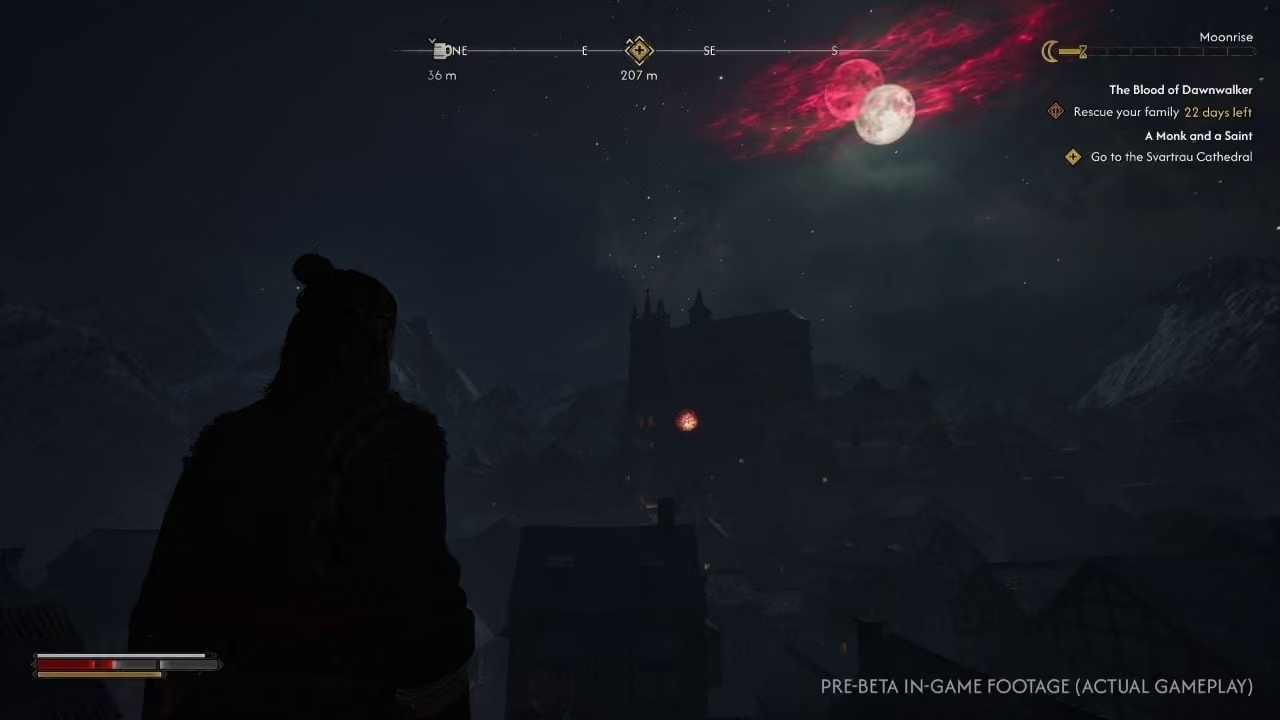
The world also becomes more vertical. Rooftops, walls, ceilings, and high clues can turn into viable routes. In the official gameplay presentation, a cathedral clue that could not be reached during the day became accessible at night.
The practical differences
The forms are not a simple strong/weak pair. Human Coen can be better suited to grounded interactions, sword techniques, and witchcraft; vampire Coen can bypass terrain, fight with claws, and sustain himself through blood. A quest can favor one form without making the other route invalid.
NPC schedules, visual clues, patrol patterns, and the risks of feeding can all affect the better approach. Use the environment and objective, not a generic tier ranking, to choose.
| System | Day / human | Night / vampire |
|---|---|---|
| Combat identity | Swordplay, directional control, witchcraft | Claws, sword option, vampiric abilities |
| Magic | Carved-rune formulas and active hexes | More instinctive vampiric power; human runes seal |
| Recovery | Human resources taught by the game | Blood and feeding become central |
| Traversal | Grounded paths and ordinary access | Shadowstep, wall/ceiling movement, rooftop routes |
| Quest reading | Daytime NPCs and human solutions | Night routes, supernatural clues, altered risks |
Switch forms with a purpose
Moving from day to night can advance narrative time. Before changing, identify what the other form will solve: a high clue, a patrol route, a social opportunity, a healing constraint, or an ability requirement.
If the objective does not need the other form yet, free exploration may reveal more information before you spend the transition. The time planner includes a form requirement field so you can group known activities efficiently.
- 1
Inspect the objective and surrounding routes in the current form.
- 2
Identify the specific ability or world state the other form provides.
- 3
Check the displayed transition or activity cost.
- 4
Bundle nearby objectives that benefit from the same form when it suits your story priorities.
Common questions
Can vampire Coen use human witchcraft?
The carved runic scars used for human magic seal at night, while vampire form draws on power differently. The two kits are not identical.
Does changing day to night use time?
Official gameplay material identifies day/night changes as one way narrative time can advance.
Is vampire form always stronger?
No. It offers major mobility and predatory tools, but daytime swordplay, witchcraft, NPC activity, and quest context can make human form the better route.