Short answer
Dawnwalker's 30-day system is a spending budget, not a continuously ticking clock. Time advances when you finish marked quest actions, choose certain dialogue options, or deliberately move between day and night. Exploration and combat do not advance it by themselves.
Key facts
- 30 days and 30 nights to pursue the family rescue
- No continuous real-time countdown
- Hourglass-marked actions show their cost before commitment
- Exploration and combat do not spend story time by themselves
- Missing the rescue window changes the family outcome but does not end the game
Think of time as a quest resource
The rescue objective gives Coen 30 days and 30 nights, but minutes do not pass simply because the player is walking through the world. Narrative time moves at authored checkpoints. That lets you inspect the environment and learn combat without a real-world speedrun timer.
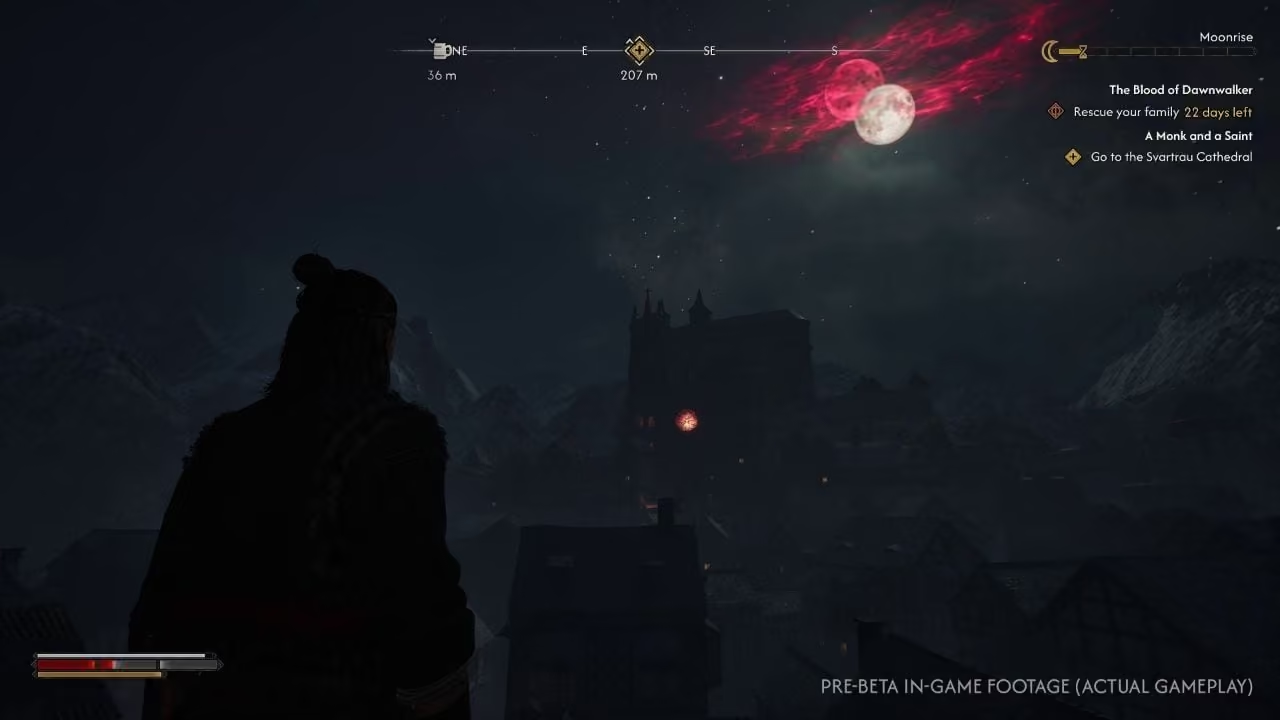
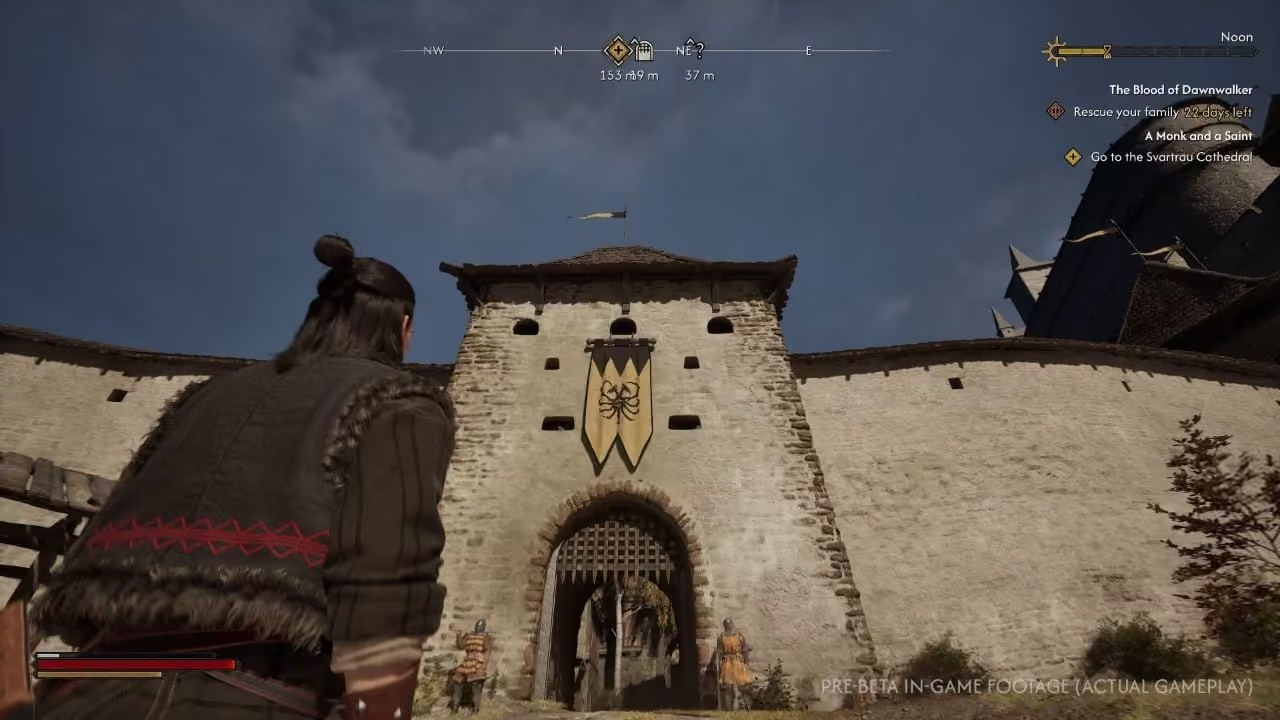
When an activity will move time, the interface uses an hourglass indicator and shows the cost before completion. That makes the choice part of route planning: the question is whether the information, ally, reward, or consequence is worth that portion of the rescue window.
What advances time
Official explanations identify finishing quests, some specific dialogue options, certain goals, and changing between day and night as ways the world advances. The exact cost belongs to the in-game activity display; it should not be guessed from an undated guide.
Some activities trigger automatically; the Time Bar warns you before they spend time. Check it while approaching objectives.
| Activity | Time behavior | Planning response |
|---|---|---|
| Free exploration | Does not continuously advance time | Scout routes and gather context before committing |
| Ordinary combat | Does not advance time by itself | Learn the encounter without treating seconds as campaign loss |
| Marked quest completion | Advances by the shown cost | Record the hourglass value before confirming |
| Certain dialogue choices | Can advance time | Read the prompt and consequence carefully |
| Day/night change | Can advance the story clock | Change form for a reason, not as idle menu cycling |
The rescue deadline is not a hard game over
The official Town Crier Q&A clarifies that the game does not end when the 30-day window passes. Coen's family may suffer the consequences, but the wider game can continue.
That distinction matters: the system creates narrative pressure and sacrifice without deleting the whole open world at zero. It also means that a route built around revenge, exploration, or accepting a darker outcome can remain a valid role-playing path.
A reliable planning method
Plan from information visible in your own save. Write down the current day or night, the time cost shown for each activity you are considering, and whether the objective requires a specific form. Unknown costs should stay unknown until the game shows them.
Enter your remaining budget and known activity costs in the time planner. It totals your entries, shows the day/night split, and highlights any amount over budget. Add an activity once you know its cost.
- 1
Record your current story-time budget from the game.
- 2
Add only activities whose hourglass cost you can see.
- 3
Separate required rescue steps from optional preparation.
- 4
Reserve room for form changes and decisions you have not encountered.
- 5
Re-plan after a consequence changes the available route.
Common questions
Does time pass while exploring?
No. Official material says exploration does not continuously advance narrative time.
Does combat use time?
Ordinary combat does not advance the story clock by itself. A related quest completion can still carry a shown time cost.
Does the game end after 30 days?
No. The family objective may resolve badly, but the official Q&A says the game itself continues.