Short answer
The Blood of Dawnwalker spends story time on marked activities, training, and day/night changes. Free exploration and ordinary combat do not run a continuous timer. Watch activity warnings as well as dialogue choices: some events advance time automatically.
Key facts
- Free exploration does not run a continuous story timer
- Ordinary combat is free unless it completes a cost-bearing objective
- A flashing Time Bar can warn of an automatic time cost
- Ability training uses time as well as shared Skill Points
- A launch review reports that fast travel does not consume a time notch
Current time-cost list
The Blood of Dawnwalker separates playing time from the story schedule. Exploring Vale Sangora can take as long as you need; completing an activity that carries a time cost moves Coen closer to the rescue deadline.
Check the cost attached to the next activity. A quest can contain several paid steps alongside free travel, conversations, and combat, so a single objective does not always represent the cost of its whole quest chain.
| Activity | Does it advance time? | What to look for |
|---|---|---|
| Free exploration | No continuous cost | Roam, scout, and inspect without a real-world countdown |
| Ordinary combat | No, by itself | A fight can still finish a marked objective that has its own cost |
| Marked quest step | Yes | Read the hourglass value before confirming the action |
| Certain dialogue choices | Can | Look for a signposted commitment rather than assuming every conversation costs time |
| Automatic activity trigger | Yes, when triggered | Watch the flashing Time Bar and ticking warning |
| Day/night change | Can | Budget the phase change when the other form is needed |
| Learn or improve an ability | Yes | Training combines Skill Points with a displayed time investment |
| Fast travel | No notch in one launch review | Recheck the current patched build if the interface shows otherwise |
Why time can advance without a confirmation dialog
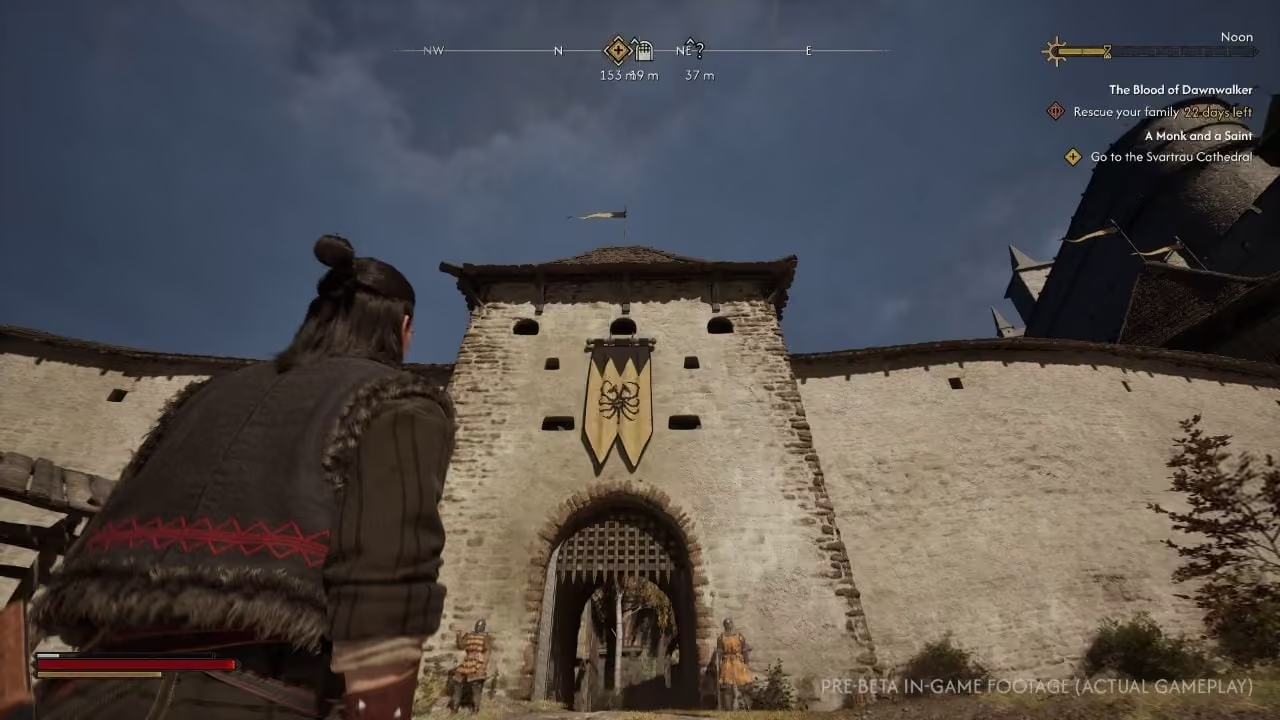
AltChar’s gameplay guide documents activities that spend time automatically when engaged. Before continuing, check the upper-right Time Bar: flashing segments and a ticking sound warn of the approaching cost.
Compare an objective’s grey cost preview along the bottom of the Quest Journal before choosing a route. Check the sun or moon icon for its required phase.
Skill training competes with quest time
The August 31 Skills & Power bulletin adds an important cost that older timer summaries miss. Unlocking and improving abilities requires Skill Points and time. The same points can be assigned across Swordmastery, Witchcraft, and Vampirism, so a skill choice spends both a shared progression currency and part of the story schedule.
Finding a manual and buying the skill are separate decisions. A manual can reveal access to a Swordmastery or Witchcraft ability, but the training screen is where you should read the required points and time. Do not assume that picking up a book has already paid the learning cost.
Check the next activity before spending time
A quest can mix scouting, combat, conversations, and steps that advance the clock. Compare the next objective with your remaining budget, then check again when the objective changes.
Treat exploration as preparation: find entrances, locate your destination, and decide which reward you want before starting its activity. Optional objectives compete with training and rescue plans for the same budget.
- 1
Note the current day or night before opening the objective.
- 2
Scout the route and gather information before starting its activity.
- 3
Read the next activity’s time cost and any warning on the Time Bar.
- 4
Compare the reward or consequence with your remaining rescue budget.
- 5
Update the planner after the action changes the available route.
Fast travel and the activity at your destination
A launch review published on August 31 reports that fast travel does not consume a time segment in the review build. That is useful evidence for route planning, but it is not a universal publisher rule and could differ after a patch or in a special story transition.
Use fast travel as a navigation shortcut, then watch for any separate quest, rest, or phase-change prompt at the destination. The movement system and the narrative commitment can occur next to each other without being the same cost.
Build a plan from costs your save shows
The safest route uses confirmed values from your own quest and skill screens. Enter those values in the time planner, keep undecided activities separate, and leave a reserve for form changes or story branches you have not reached.
This approach stays useful even when patches alter individual activities. The page supplies the categories that can spend time; the current game UI supplies the number for your save.
- Keep rescue-critical objectives separate from optional preparation.
- Count training time before committing to a multi-skill build.
- Use free scouting to reduce the chance of spending a segment on the wrong approach.
- Re-plan after a consequence closes or opens a different route.
Common questions
Does exploring advance time in The Blood of Dawnwalker?
No. Free exploration does not continuously advance the narrative clock; time moves at signposted commitments.
Does learning a skill cost time?
Yes. The official Skills & Power bulletin says unlocking and improving abilities combines Skill Points with a time investment.
Does fast travel use a time notch?
One August 31 launch review reports that it does not. Follow the current patched game's prompt if a special trip or related objective displays a cost.
Why did time advance without a confirmation dialog?
Some activities trigger automatically. Watch for a flashing Time Bar and ticking warning before engaging.